
From Java to Your Garden: Inside the Villages Where Our Stone Sculptures Are Carved
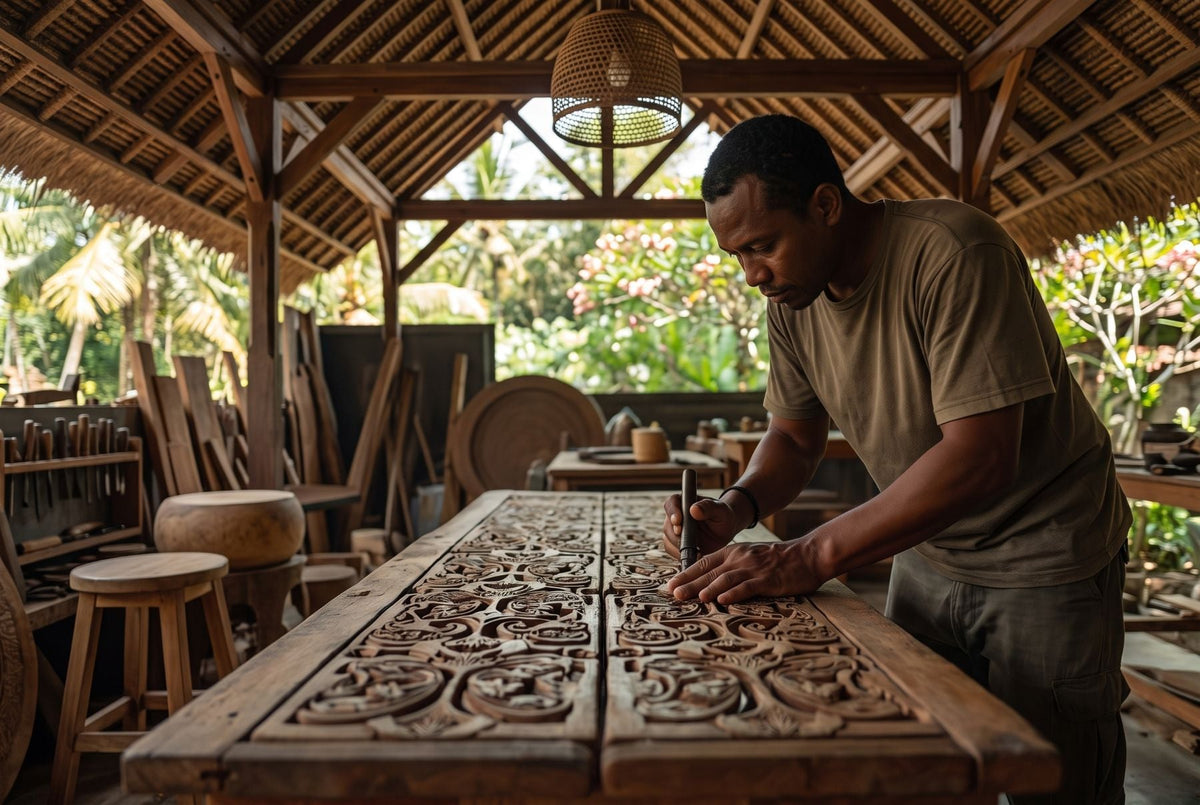
There's a particular sound that stays with you the first time you stand in a stone carver's workshop in Central Java — the steady, unhurried tap of chisel on volcanic rock. No machines drown it out. No conveyor belt hurries it along. It's just a craftsman, a block of stone, and a design that's been passed down through generations of hands before his.
That sound is where Tropika Living begins.
A Holiday That Became a Business
Our story didn't start in a boardroom. It started on a trip to Central Java, at a point when most of us were re-evaluating what we actually wanted to spend our time on. What was meant to be a break turned into something else entirely — an introduction to a world of craftsmanship that most Indian homeowners never get to see up close: artisans carving andesite stone into fountains, sculptors shaping garden pieces by hand, woodworkers turning raw teak into furniture that will outlast the people who bought it.
It became impossible to unsee. India's premium home décor market was full of imported "artisanal" pieces that were anything but — mass-produced, machine-finished, and dressed up with a story that didn't hold up under questioning. Meanwhile, a few thousand kilometres away, actual master craftsmen were producing extraordinary work, largely unseen by the Indian market. That gap became Tropika Living.
What "Handcrafted" Actually Means Here
We source directly from artisan workshops across Central Java and Bali — not through layers of trading agents, not from bulk factory catalogues. When we say a piece is handcrafted, here's what that looks like in practice:
- Stone sculptures and fountains are carved from volcanic stone (commonly andesite), a material Java's geology produces in abundance. Each block is worked by hand over days, sometimes weeks, depending on the detail.
- Teak furniture is shaped by craftsmen who've often trained under family members doing the same work for decades. Joinery is done the traditional way — not stapled or glued for speed.
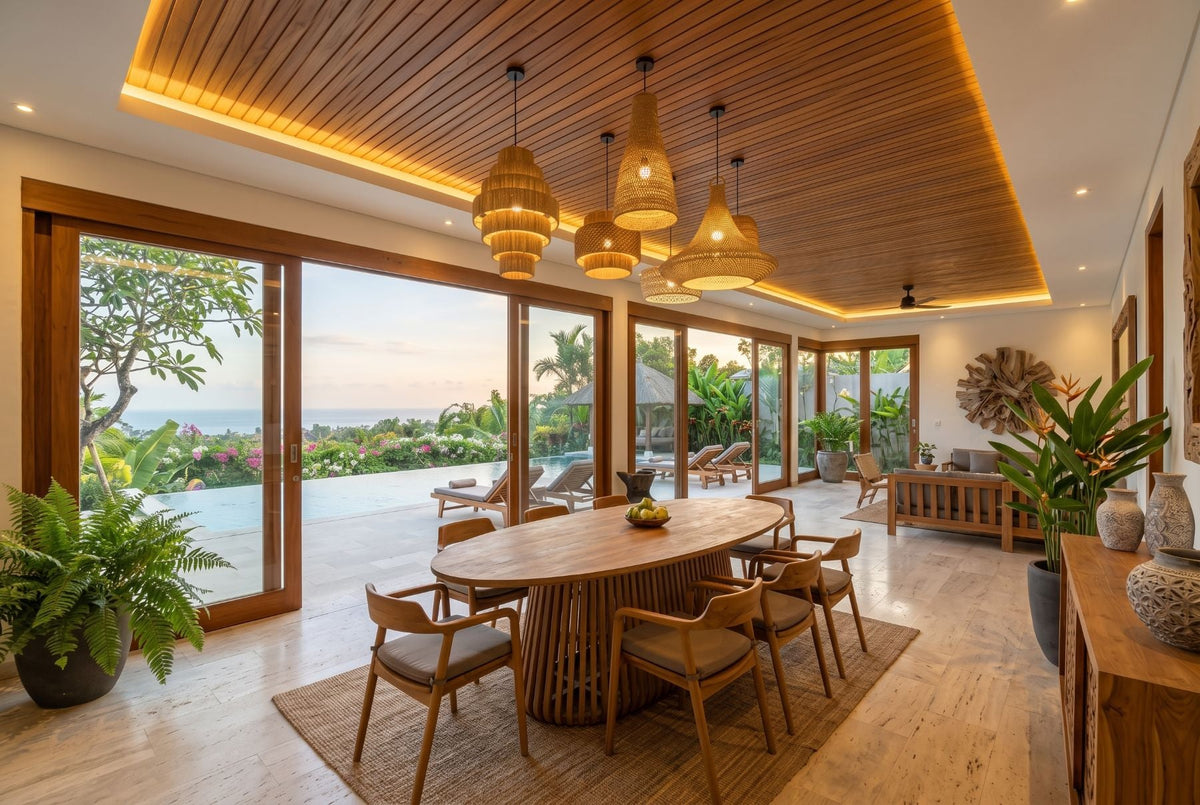
- Rattan and wall panels go through a process of weaving and shaping that simply cannot be replicated by a machine trying to mimic the look.
None of this is a marketing flourish. It's the actual difference between a piece that was made and a piece that was produced.
Why This Is Harder Than It Sounds
Sourcing this way is genuinely inefficient compared to buying from a factory catalogue. Every piece has slight variation — because it was made by a person, not a mould. Lead times depend on artisan availability, not a production line schedule. Quality control means physically inspecting work, not just checking a spec sheet.
We think that inefficiency is the point. It's why our brand promise is simple: All Stocked. All Real. No AI. Every piece in our Bangalore showroom is physical inventory we've seen, sourced, and stand behind — not a rendering, not a "coming soon," not an AI-generated mockup dressed up as a product photo.
Bringing It to India
What we're really doing at Tropika Living is closing a distance — geographic, but also a distance in trust. Between a craftsman in a Javanese village and a homeowner in Bangalore who wants a fountain that will actually look like the photo, feel as solid as it looks, and hold up in an Indian garden through monsoon and summer alike.
That's the promise behind every stone sculpture, teak console, and rattan chair that makes it into our showroom. Not just imported — carried across, carefully, from hands that know exactly what they're doing.